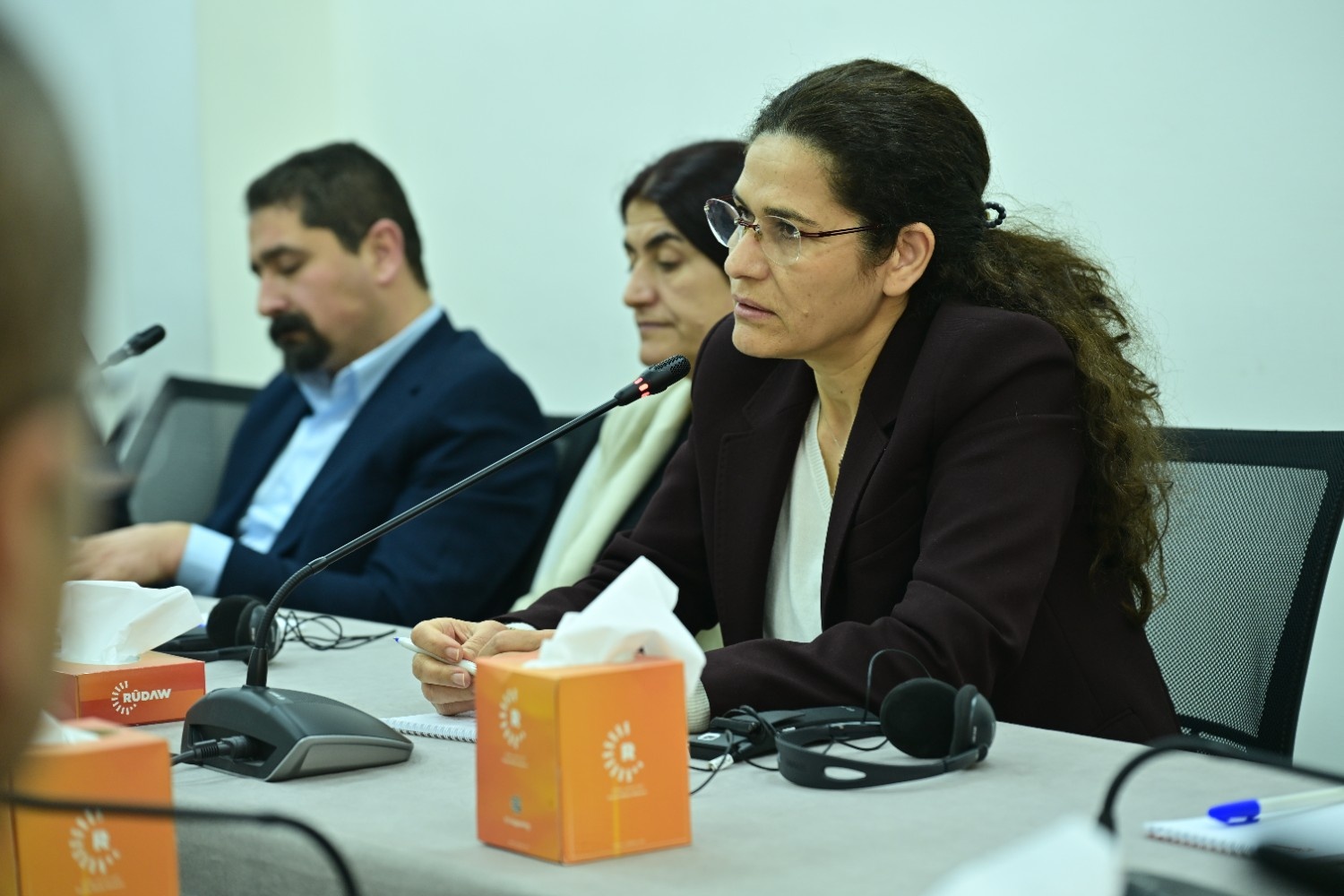
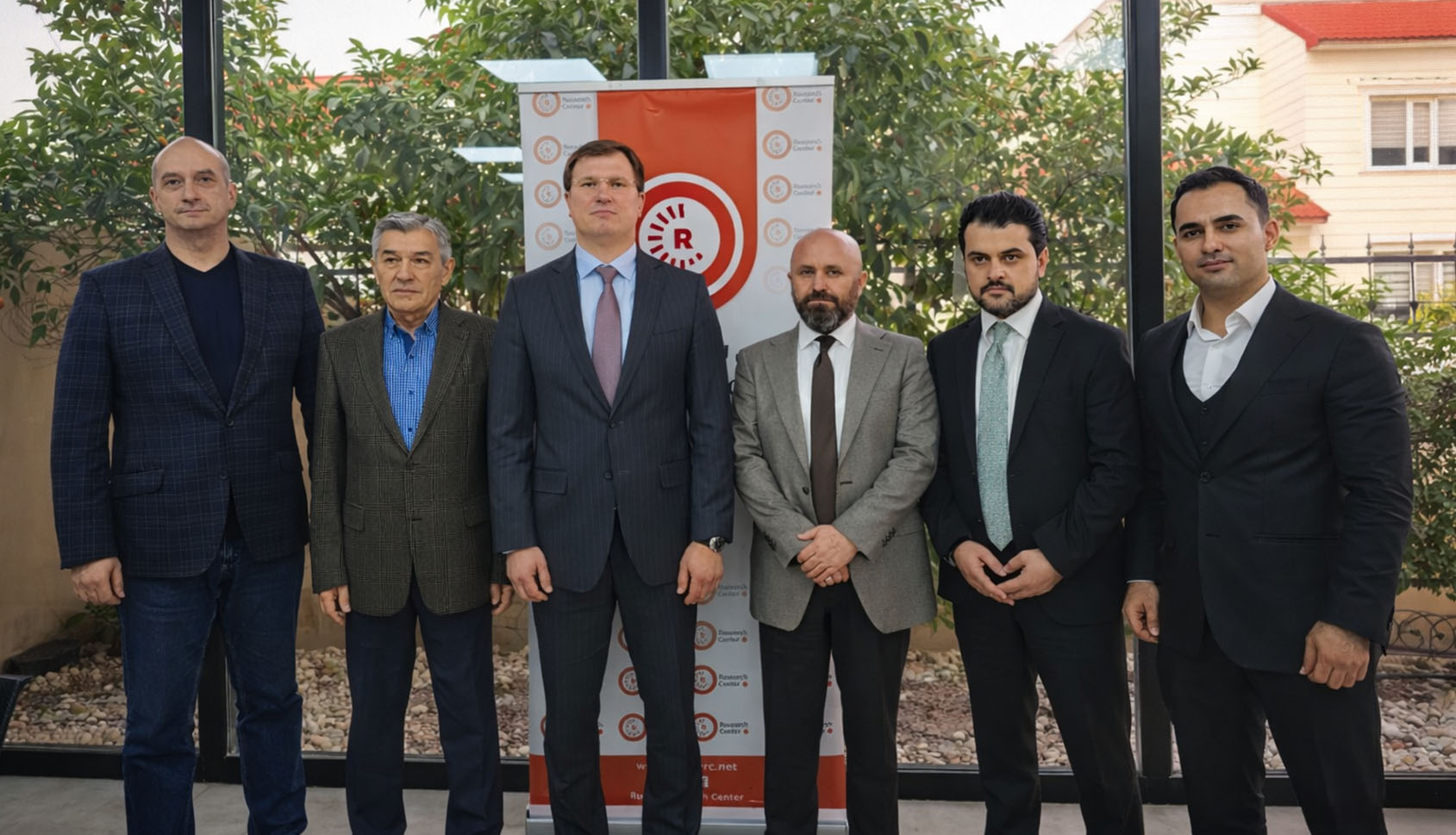
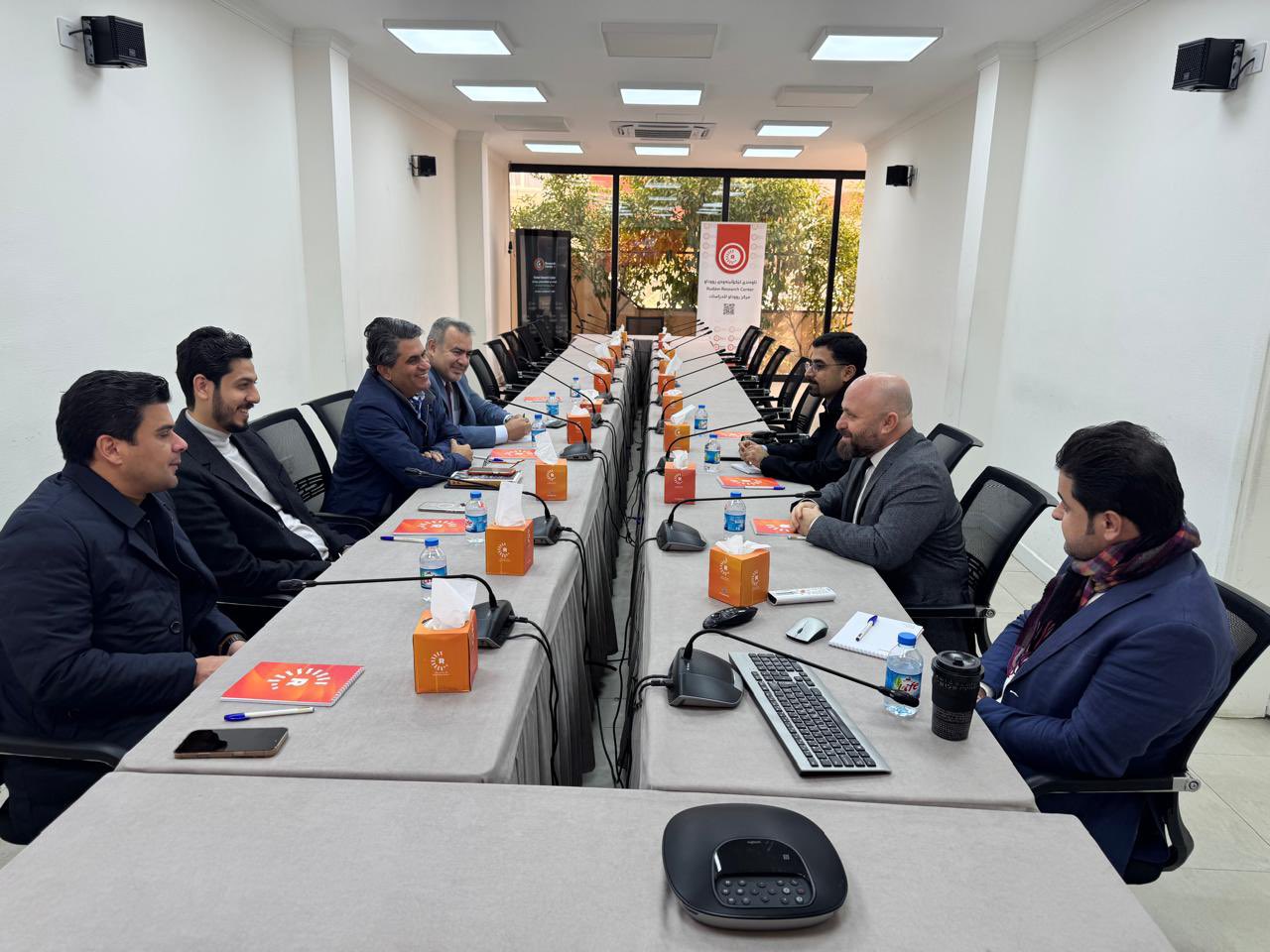
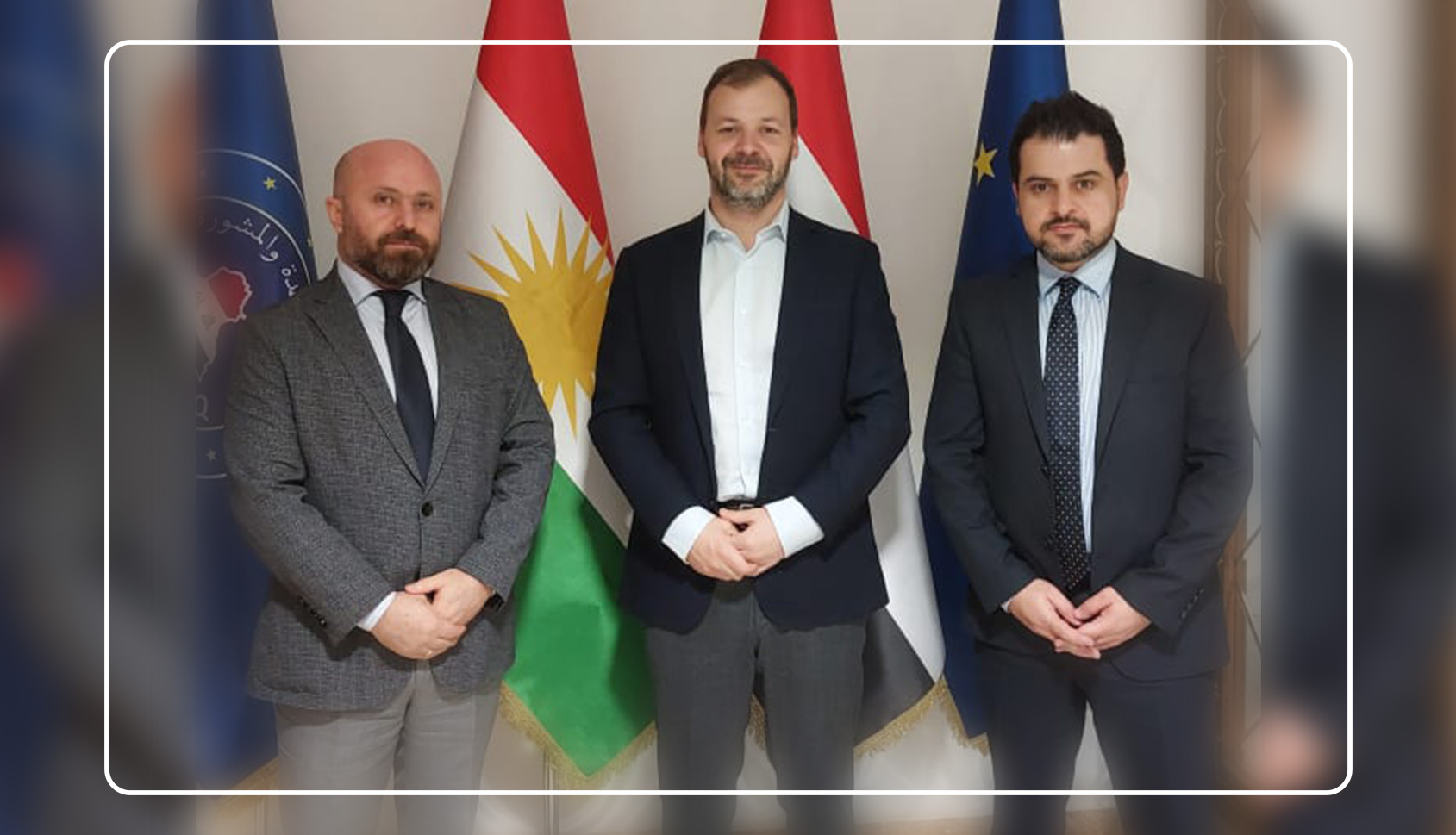
On Monday, 23 February 2026, the Rudaw Research Center convened a roundtable under the Chatham House Rule with Ilham Ahmad, Co-Chair of the Foreign Relations Office of the Autonomous Administration. The session was attended by Rohilat Afrin, commander of the Women’s Protection Units (YPJ); the German Consul General in Erbil; representatives of several other consulates; and a number of political figures, journalists, and academics based in Erbil.
Participants engaged in an in-depth discussion of the current situation in Syria, with particular focus on the predominantly Kurdish-administered areas in the north and northeast of the country. Central to the discussion was the agreement reached on 29 January 2026 between the Autonomous Administration and the new Syrian government. The agreement reportedly addresses issues of administrative coordination, military restructuring, and the framework for integrating local institutions into state structures, while leaving several key political and constitutional questions unresolved.
Participants examined what the agreement means in practice for the future of the Kurds in Syria. Key issues included military unification and institutional integration, as well as the status of Kurdish-language education under the emerging political order. Participants stressed that the durability of the agreement will depend on the extent to which it guarantees political representation, preserves local administrative authority, and provides clear mechanisms for implementation.
The roundtable also explored recent conflicts and tensions, analyzing their root causes and broader implications. Participants discussed the factors that led to renewed hostilities, the dynamics of ceasefire negotiations, and the roles played by regional and international actors in facilitating an agreement to halt fighting.
A significant portion of the session focused on the humanitarian situation in Kobani, where participants described an ongoing siege and worsening living conditions. According to those present, access to water, electricity, healthcare, and essential supplies remains severely restricted, raising concerns about the long-term sustainability of civilian life in the area.
Regarding the return of internally displaced persons (IDPs) and the future governance of Afrin, participants noted that discussions are underway, with several hundred families reportedly prepared to return. Talks are focusing on how Afrin should be administered and how its local population can be meaningfully represented in political and administrative institutions — a condition viewed as essential for ensuring the safe and voluntary return of displaced residents.
The resurgence of Islamic State (ISIS) was identified as a pressing security concern. Participants referenced recent incidents in Al-Hol camp, including reports of detainee escapes, and discussed the management of both Al-Hol and Roj camps. They warned that deteriorating security conditions and unresolved detainee issues could create space for ISIS to reorganize and exploit instability.
The session concluded with questions regarding the status of the Roj Peshmerga; the roles of Turkey, the United States, and France; the future of foreign fighters within the Syrian Democratic Forces (SDF); and the mechanisms of military integration, including the formation of new brigades. Particular attention was also given to how the Women’s Protection Units (YPJ) might be incorporated into the Syrian army, and under what legal and structural arrangements such integration could take place.