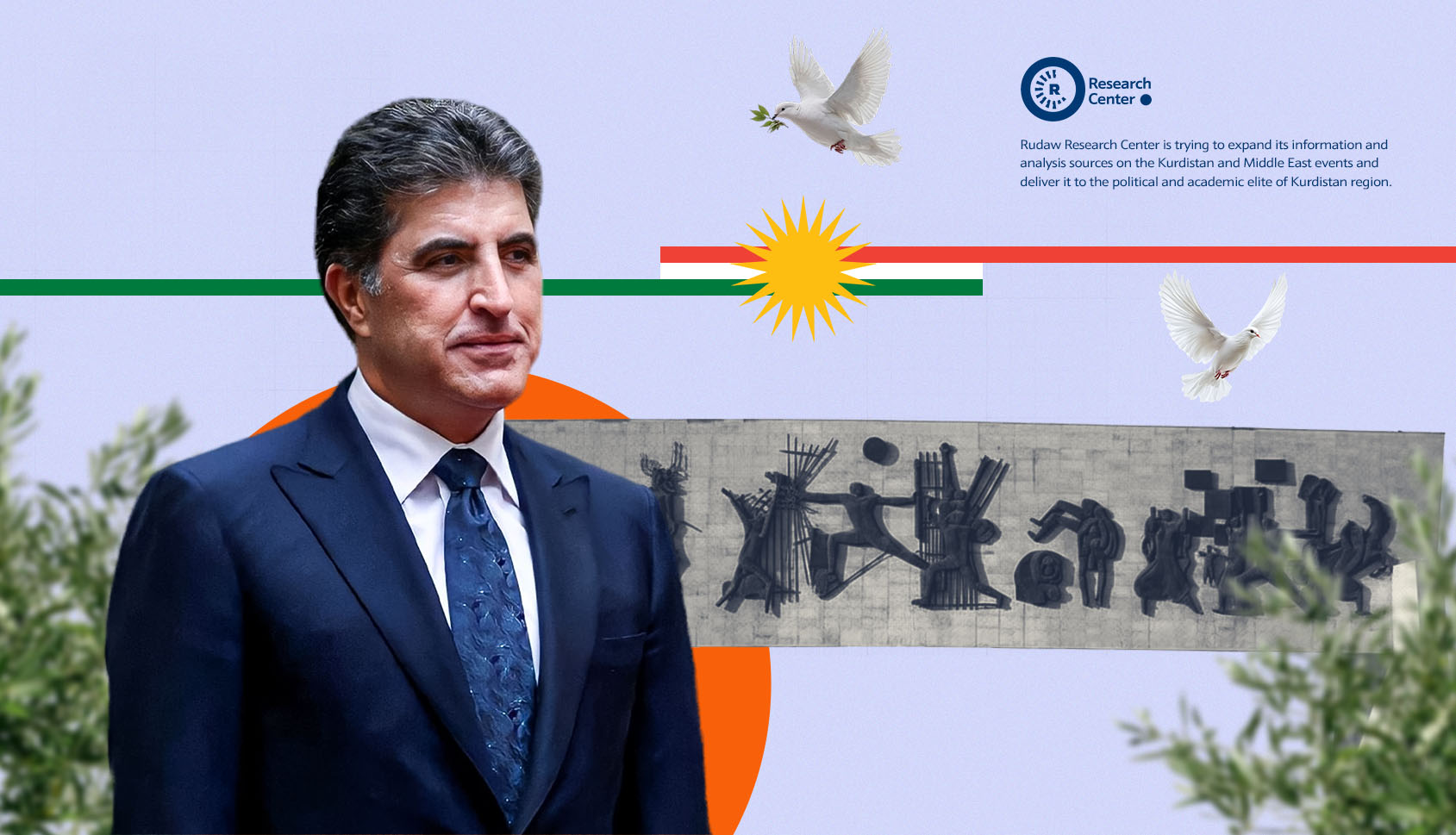
The recent visit of Kurdistan Region President Nechirvan Barzani to Baghdad carries far greater strategic weight than merely being confined in the negotiations to form Iraq's new government. It is, in essence, a reflection of the process of political realignment between Iraq's political forces and the Kurdistan Region in the shadow of the repercussions of the 2026 Iran war — and the sweeping transformations that have reshaped the Kurdish issue and Iraq's political future.
It is evident that following the arrival of Ali Zaidi and the Shia Coordination Framework delegation in Erbil, the matter of government formation was effectively unlocked. It may therefore be more instructive to view the Kurdistan Region President's visit to Baghdad within a broader framework — one defined by the renewed mutual need between Baghdad and Erbil, particularly on critical geopolitical issues such as the war and the pivotal post-war phases that lie ahead.
It is apparent that the formation of a joint committee for further dialogue on the fundamental issues between the Kurdistan Democratic Party and the Shia Coordination Framework signals a degree of mutual willingness. However, in reality, resolving the outstanding issues between Erbil and Baghdad through committees and temporary arrangements simply does not work — just as, in its own time, the government-formation record of the Sudani administration equally failed to resolve those same issues.
Above all, the significance of this visit is deeply concentrated in its geopolitical dimension. It is evident that at this stage, Shia politics in Iraq has a strategic need to normalize its relations with Erbil — and this is a mutual necessity, with Erbil equally desirous of the same. Broadly speaking, following the collapse of the Assad regime and the wars of 2025 and 2026 against Iran, the entire region finds itself in the throes of a profound geopolitical transformation. Shia politics across the region as a whole — from Lebanon to Tehran — is embroiled in an unprecedented state of war and complexity in its confrontation with the United States, Israel, and its surrounding environment. This situation carries an even greater impact in a country like Iraq, which sits at the very epicenter of these events both politically and geographically.
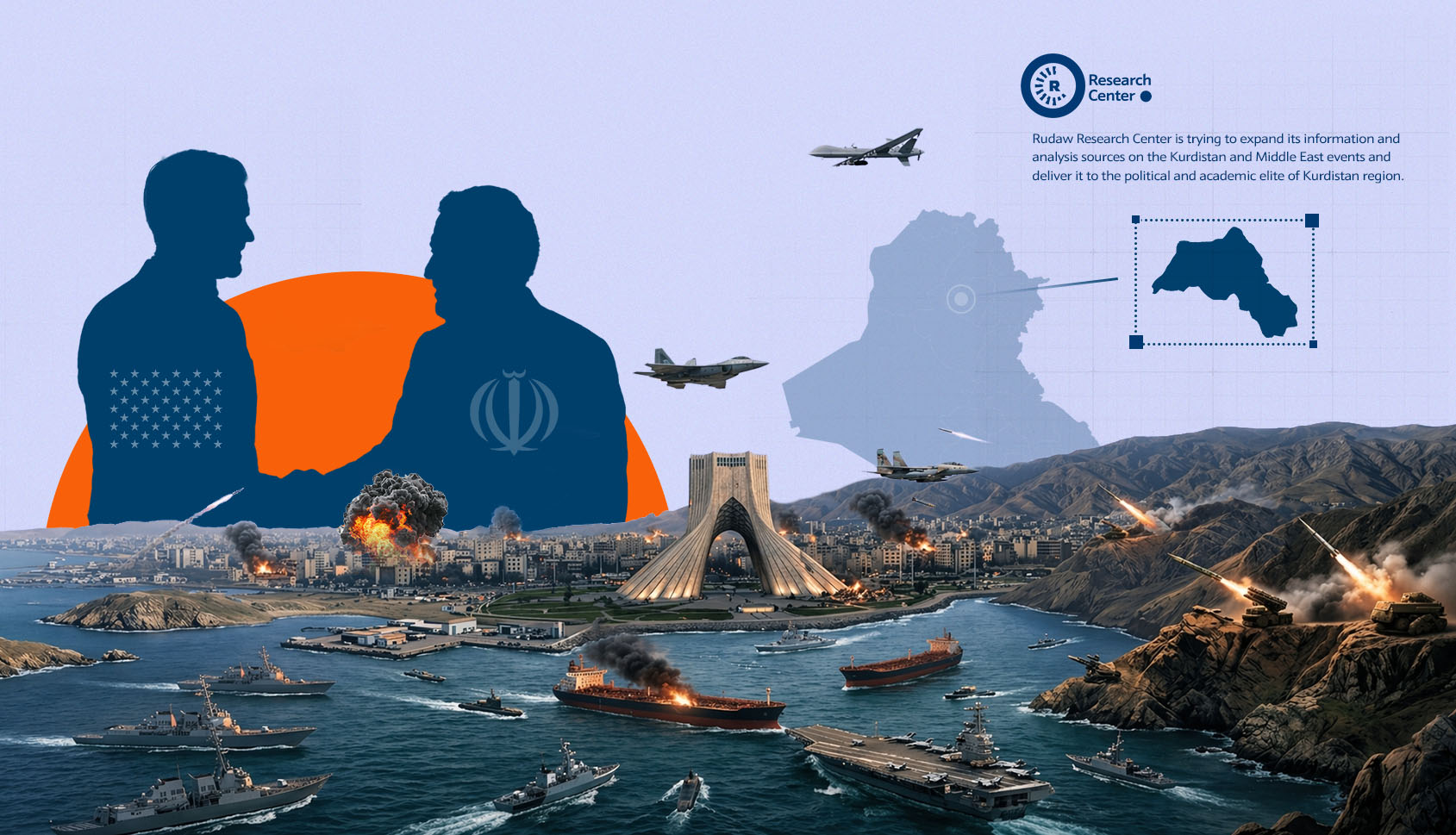
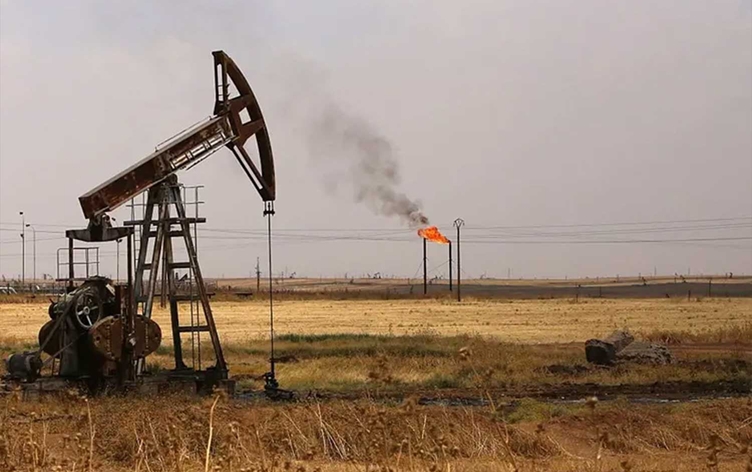
The 2026 war between the United States and Iran carried several historic and significant lessons for Iraq's Shia political actors. Among the most prominent was the realization that threats do not come solely from adversaries — but that allies themselves can, at times, become a source of damage and strategic setback. For instance, over the past two months, the Strait of Hormuz Closure — Iraq's principal oil export artery — created the most consequential "geo-economic" dilemma Baghdad has faced. This crisis compelled the political decision-making center to reluctantly turn its gaze toward alternative transit routes, engaging in intensive dialogue with the Kurdistan Region, Syria, and even Jordan in search of overland corridors through which energy could be transported. It was precisely here that the Kurdistan Region's position within Iraq's economic map asserted itself as a strategic transit route of considerable importance.
Another critical lesson of this war is that the mere possession of military force and hard power alone is no guarantee whatsoever for the protection of energy corridors and economic security. Mohammad Baqer Qalibaf, the Speaker of the Iranian Parliament, has openly acknowledged that United States’ naval power surpassed that of Iran — yet Iran demonstrated to the world that an "asymmetric warfare" and with comparatively limited military capability, even the most vital economic arteries of the world can be brought to a standstill. The lesson this holds for Baghdad is that any Iraqi effort to open alternative energy routes or establish new economic corridors requires, before anything else, not military force, but rather "internal reconciliation." This runs contrary to certain previous perspectives held in Baghdad, which had assumed that the “Development Road” project could be pursued without the Kurdistan Region — or indeed wielded as a pressure tool against Erbil. What is needed instead is a reconciliation that stands removed from political tension and builds the kind of genuine mutual trust between Erbil and Baghdad that shields economic corridors from all forms of internal and regional threat.
Regarding the formation of Iraq's new government, it appears that Trump's intervention to block Nouri al-Maliki's return to the premiership has had some effect. However, it is necessary here to draw upon a historical event that has endured as a cautionary lesson in US-Iraqi relations: at the time, Christopher Hill, the former U.S. Ambassador to Baghdad, convinced Obama — against the judgment of General Odierno — to support Maliki in a manner similar to Iran's backing, on the assumption that Maliki might move against Iranian hegemony. The opposite, of course, proved to be the case. In the same vein today, there is every likelihood that the hopes US has pinned on Ali Zaidi — to diminish the role and influence of armed factions within Iraq's political arena — may meet with disappointment. The reason for this traces back to the fact that the influence of armed factions over Iraqi state power is a far more "structural" and deeply rooted issue than one that can be resolved merely by changing political characters, as was demonstrated in the cases of both Mustafa al-Kadhimi and Mohammed Shia' al-Sudani alike. It is precisely at this juncture, and amid this climate of profound uncertainty, that the role of the Kurdistan Region and its President as a "strategic bridge" acquires ever greater significance — a position that presents itself to Washington and to Baghdad's decision-making center alike as a balancing mechanism capable of playing an effective and consequential role in times of crisis.
At the same time, Iraq — by virtue of the policies and conduct of its armed factions — maintains a deeply complicated relationship with the Gulf States and several other Arab countries. This stands in sharp contrast to the Kurdistan Region, which enjoys strong and well-established ties with Jordan and the Gulf states alike. Kurdistan Region President Nechirvan Barzani is, moreover, one of those political figures capable of conducting dialogue with opposing camps simultaneously. Prior to his visit to Baghdad, he held talks with Abbas Araghchi, Iran's Foreign Minister, and subsequently met with Mohammed bin Zayed, President of the United Arab Emirates.
On the other hand, should the situation between Iran and the United States remain frozen in its current state — a condition of "neither war nor peace" — it is not unlikely that an economic rivalry between Turkey and Iran will emerge within Iraq. This competition would not be confined merely to capturing a market of over 45 million Iraqis, but would extend into a struggle for control over energy routes and economic corridors that could be viewed as alternatives to Hormuz — corridors whose very existence diminishes the geopolitical leverage of that strait. Within this complex equation, whether in times of war or in times of peace, the Kurdistan Region's position acquires ever greater strategic weight and significance.
Viewed from this perspective, it becomes evident that the Kurdistan Region — despite all its internal challenges and disputes — has demonstrated that it is a significant factor within the regional equation. The existence and political consolidation of the Kurdistan Region is therefore not only not contrary to Iraq's interests, but constitutes a pivotal asset through which Iraq can navigate its geopolitical crises.
At the same time, the Kurdistan Region President's visit to Baghdad draws its impetus from an internal Kurdish necessity as well. Engagement with Baghdad is viewed as a pathway to resolving economic, security, and internal affairs issues alike. In recent times, internal Kurdish divisions have opened the door not only for Shia actors, but even for figures from within Sunni ranks — such as Mohammed al-Halbousi — to become embroiled in Kurdish internal rivalries, as was clearly manifested in the disputes over the Kirkuk governorship election and the presidency of the republic. Without question, greater engagement and a stronger presence in Baghdad does not in any way mean that all outstanding issues between Erbil and Baghdad will be resolved — but it at least creates a barrier against further interference in Kurdistan's internal affairs, and smooths the path toward reconciliation among Kurdish parties, much as the Agreement of the 1st of March 1970 had once paved the way for the reconciliation of the Kurdistan Democratic Party with the Patriotic Union of Kurdistan.