Overview
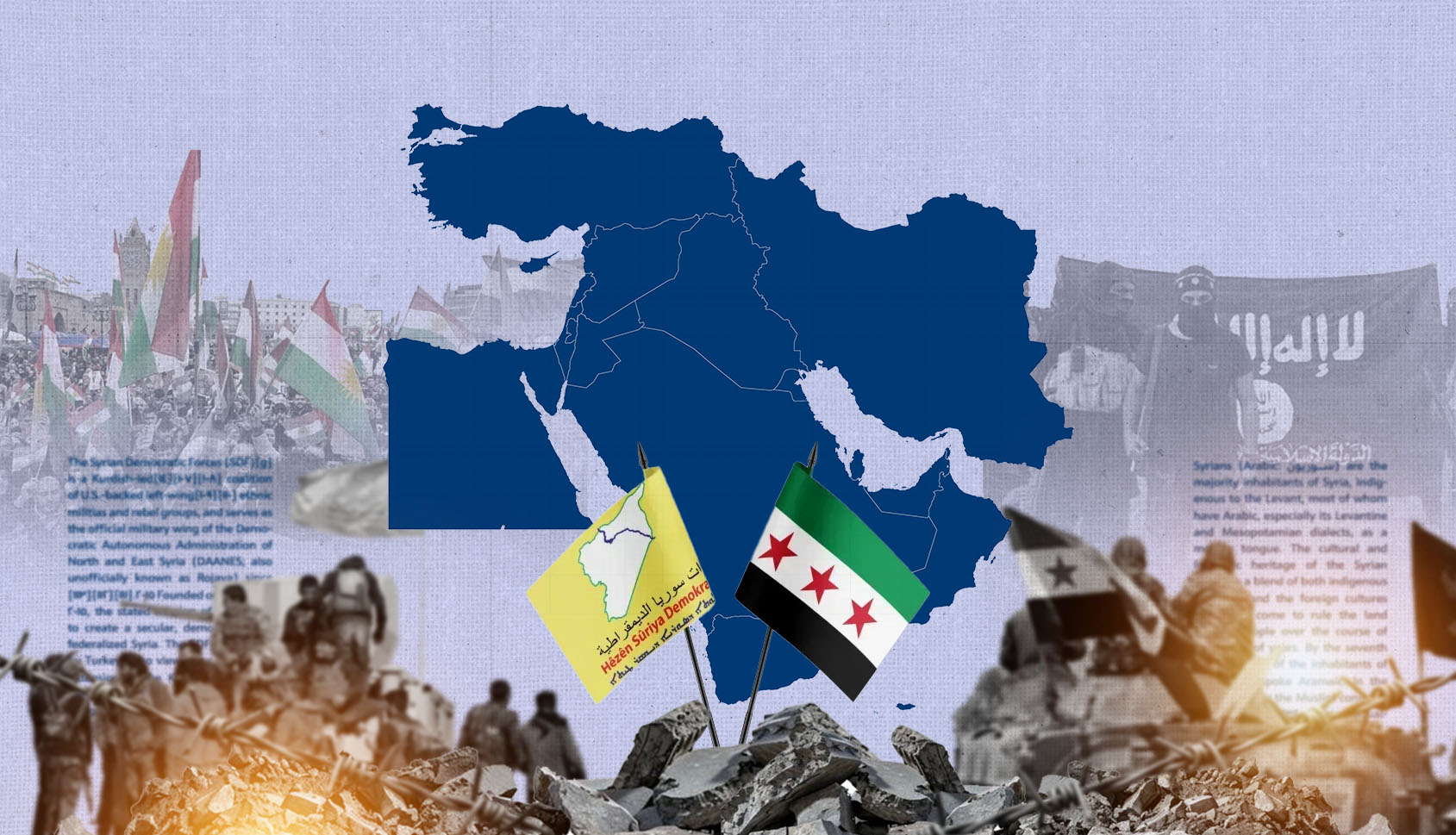
Both the ceasefire and the negotiations between the Syrian Democratic Forces (SDF) and the Syrian interim government have remained fragile. However, the most recent agreement between the two sides—reached on the 27th of January, 2026, and announced publicly on the 30th of the month—appears to represent an important turning point. The agreement has taken shape under the combined influence of developments on the ground and the broader political-military dynamics unfolding across the Middle East.
In a broader context, it becomes clear that the issue of Northeast Syria (Rojava) is not merely an “internal Syrian problem.” Rather, the situation in northeast Syria lies at the heart of the region’s conflicts and has already generated significant political and security transformations.
Following a joint statement issued by the United States, France, the United Kingdom, and Germany, emphasizing the need to halt hostilities and establish a lasting ceasefire, a meeting was held on Tuesday, the 27th of the month. The meeting brought together Mazloum Abdi, Commander-in-Chief of the Syrian Democratic Forces, and Elham Ahmed, Co-chair of the Department of Foreign Relations of the Democratic Autonomous Administration of the North and East Syria Region, on one side, and Asaad al-Shaibani, foreign minister of the interim Syrian government, on the other. The talks reportedly took place in a “positive” atmosphere and appear to have laid the groundwork for the agreement between Damascus and Abdi that was announced on the 30th of the month.
The new agreement offers a middle-ground approach to the complex and sensitive question of how the SDF will be integrated into Syria’s military structures. Under this framework, the SDF would be incorporated as a special military division, on the condition that individual members undergo a form of state vetting. While it remains unclear how many challenges the agreement will face during the implementation phase, it has nevertheless received notable international support.
Potential Military Scenarios after a Ceasefire Breakdown
If the agreement collapses for any reason and fails to hold, several military scenarios could unfold:
First: The Syrian army is expected to tighten its siege on Kobani, a strategic Kurdish-majority city on the Turkish border. At the same time, advancing from the axes of Gire Zaro and Chil Agha in eastern Hasakah Governorate, Syrian army units may attempt to move northward toward the border areas. The apparent objective of this maneuver would be to sever the geographical link between Qamishli, the administrative center of the Autonomous Administration, and Derik, thereby disrupting internal connectivity within SDF-controlled territory.
Second: In exploiting this situation, the Syrian army may seek to benefit from both the siege and the mobilization—or passive acquiescence—of segments of the Arab population in the area. It is important to note that part of the Syrian army’s advances east of the Euphrates after the 17th of the month did not result from sustained military combats, but rather from a shift in the position of the Al-Sanadid Forces, the Arab tribal component within the Syrian Democratic Forces (SDF). This change reduced resistance on certain fronts without confrontation.
Third: This border line, due to its adjacency to the Kurdistan Region of Iraq, constitutes a vital logistical artery for the SDF. It is used both for the flow of daily necessities and as a humanitarian corridor. Losing control of this line would therefore significantly weaken the SDF’s defensive capacity. That said, the demographic composition of this area—unlike that of Raqqa or Deir ez-Zor, where Arab populations predominate—may enable the SDF to sustain a longer period of defense.
Fourth: Although Murat Karayılan, a senior figure within the Kurdistan Workers’ Party (PKK) Leadership, has suggested the possibility of resorting to “tunnel warfare,” drawing comparisons with the experience of Hamas Palestinian Movement in the Gaza Strip, this raises serious questions about the effectiveness of such tactics in Rojava. This skepticism stems primarily from the region’s geographical constraints: it lacks strategic depth and, in some areas, its width does not exceed 20 to 25 kilometers, limiting the operational utility of tunnel-based warfare.
The United States and the New Regional Security Architecture
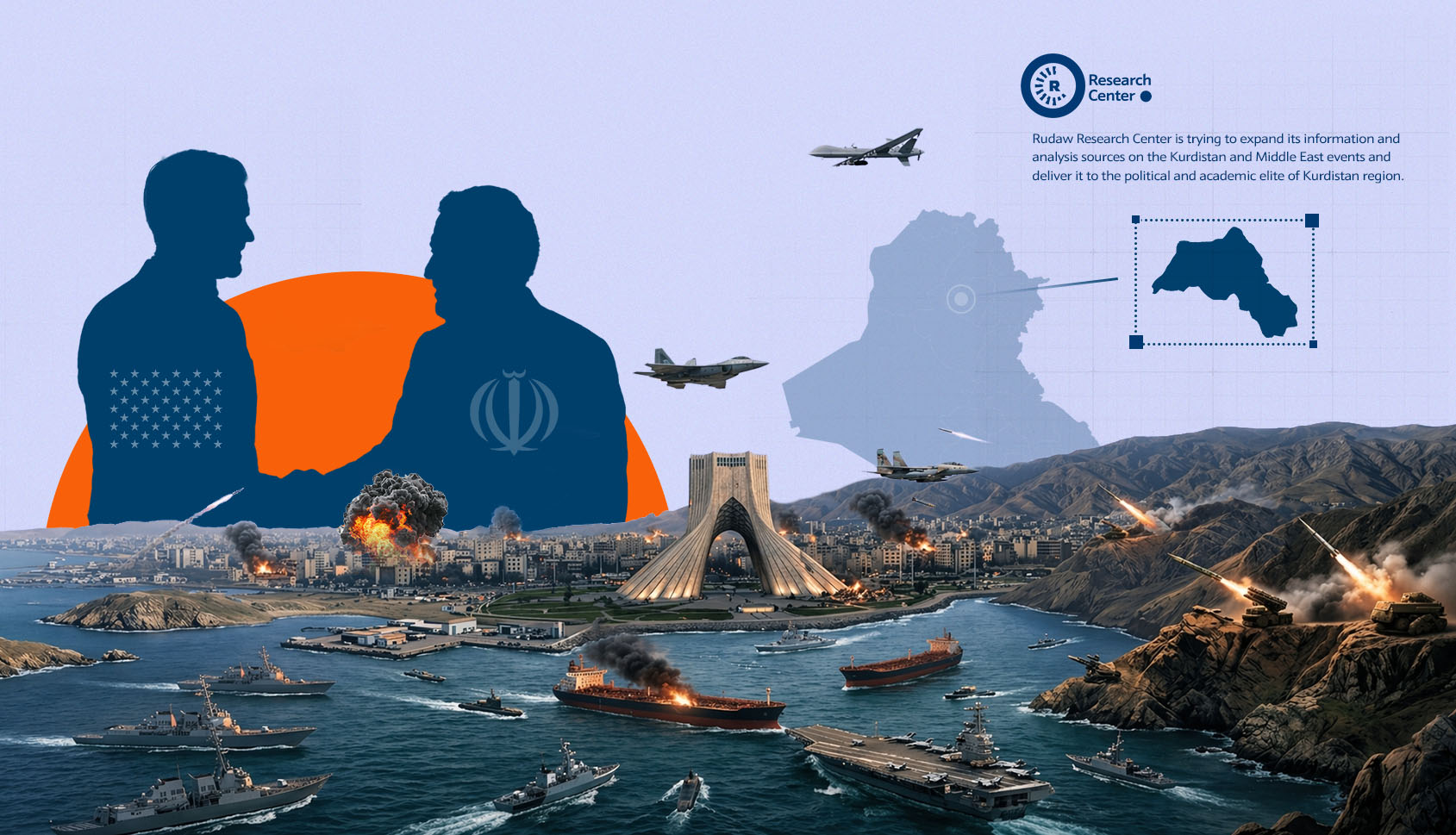
Neither the war in Syria nor the prospect of a Syria–Rojava agreement can be understood in isolation from the broader framework of the emerging regional security architecture in which the United States has assumed a leading role. This architecture rests on several interrelated pillars: weakening the so-called Shiʿa axis; promoting the emergence of a Sunni crescent stretching from Afghanistan to Syria, in which jihadist and Hanafi Sunni actors play a more prominent role, reinforcing Türkiye and Qatar as key regional players; and safeguarding Israel’s military and strategic supremacy. Collectively, these objectives also serve to curb the expanding influence of China and Russia in the region.
Viewed through this lens, Syria’s current trajectory becomes clearer. From Donald Trump’s perspective, what is unfolding can be understood as Ahmed al-Sharaa’s attempt to impose stability—an outcome that aligns with U.S. strategic priorities in several important ways.
First, it would allow the United States to withdraw its forces from Syria after a transitional period, an objective Trump has openly pursued since 2019.
Second, the emergence of a stable Sharaa-led government in Syria could facilitate broader Israeli–Arab arrangements, including a potential border understanding between Lebanon and Israel, as well as between Syria and Israel. Trump was the principal architect of the Abraham Accords and may also seek to advance a Turkish–Israeli accommodation. Within this context, Washington’s abandonment of the Syrian Democratic Forces (SDF)—a position publicly articulated by the US Special Envoy for Syria Tom Barrack—can be seen as one of the “achievements” long sought by Ankara. Türkiye’s participation in Trump’s proposed Gaza “peace board” may similarly be interpreted as a signal pointing toward the possibility of normalization with Israel, even if indirectly.
Third, Sharaa’s control over Syria’s borders with Iraq would expand the project of constructing a major barrier against Iran’s regional influence. From Washington’s perspective, there is a concern that in the absence of U.S. forces, the SDF would be compelled to align with Shiʿa groups in Iraq and Iran in order to ensure its survival. During the Syrian civil war, however, the SDF demonstrated a more complex and pragmatic approach. Despite tensions between the United States on the one hand and Iran and Russia on the other, the SDF maintained open channels with rival actors. It avoided direct confrontation with Iran, Shiʿa militias, and even Russia, while simultaneously operating alongside U.S. forces. This experience illustrates a broader reality of Middle Eastern geopolitics: in an arena shaped by great-power competition, neutrality is extremely difficult to sustain—yet choosing sides carries significant and enduring costs.
Iran and Iraq
For Iran and Shiʿa political actors in the Middle East, Syria’s recent clashes are viewed as part of a broader containment policy pursued by Türkiye, Sunni Arab states, and the United States, one that aligns with Donald Trump’s strategy of “deterrence” and sustained pressure on Iran. The arrival of Syrian forces in greater strength along Iraq’s borders has revived a deep-seated historical anxiety within the Shiʿa public sphere. This fear is reflected in the reemergence of the discourse surrounding the “return of the Umayyad army,” which was the second caliphate established after the death of the Islamic prophet Muhammad and was ruled by the Umayyad dynasty, a symbolic expression suggesting that Damascus may harbor long-term ambitions not only toward Iraq’s Sunni triangle, but potentially toward Baghdad itself.
Within this context, Shiʿa politics in the region increasingly perceives itself as encircled by a Sunni axis that begins in Afghanistan, passes through the Arab Gulf, and extends from Syria to Türkiye. At both ends of this arc stand two long-established Hanafi Sunni jihadist poles —the Taliban and Ahmed al-Sharaa. The termination of the U.S. alliance with the Syrian Democratic Forces (the SDF), alongside the facilitation of Ahmed al-Sharaa’s consolidation of authority mirroring, in some respects, the Afghan model—fits into abroader strategy aimed at containing Iran and Iran-aligned actors in Iraq.
This dynamic may help explain why the Shia Coordination Framework (SCF), the dominant political alliance of Iran-aligned Shiite parties and paramilitary groups in Iraq, formed in 2021 in response to recent developments, moved to nominate Nouri al-Maliki for the presidency of the Council of Ministers. However, it remains unclear whether this nomination can withstand Trump’s stated opposition. Robert Gates, who served as U.S. Secretary of Defense at the time, once remarked that Maliki was made prime minister because “his position was weak,” only to be later removed once he became strong. This logic may shed light on Trump’s current stance: in the past, Maliki’s weakness constituted his value, whereas today, his strength represents a liability from Washington’s perspective.
For Iraq, developments in Rojava have also revived the issue of ISIS. Under the justification of controlling ISIS members and retaining leverage with the United States and the international coalition, Baghdad agreed to assume custody of ISIS detainees. Prior to the recent upheavals, approximately 5,000 Iraqi ISIS prisoners were held in six detention facilities across Syria and Rojava, alongside nearly 5,000 Syrian ISIS members and around 2,000 foreign fighters. It appears that Iraq agreed to take responsibility for both Iraqi nationals and foreign detainees, a decision that has generated serious concern.
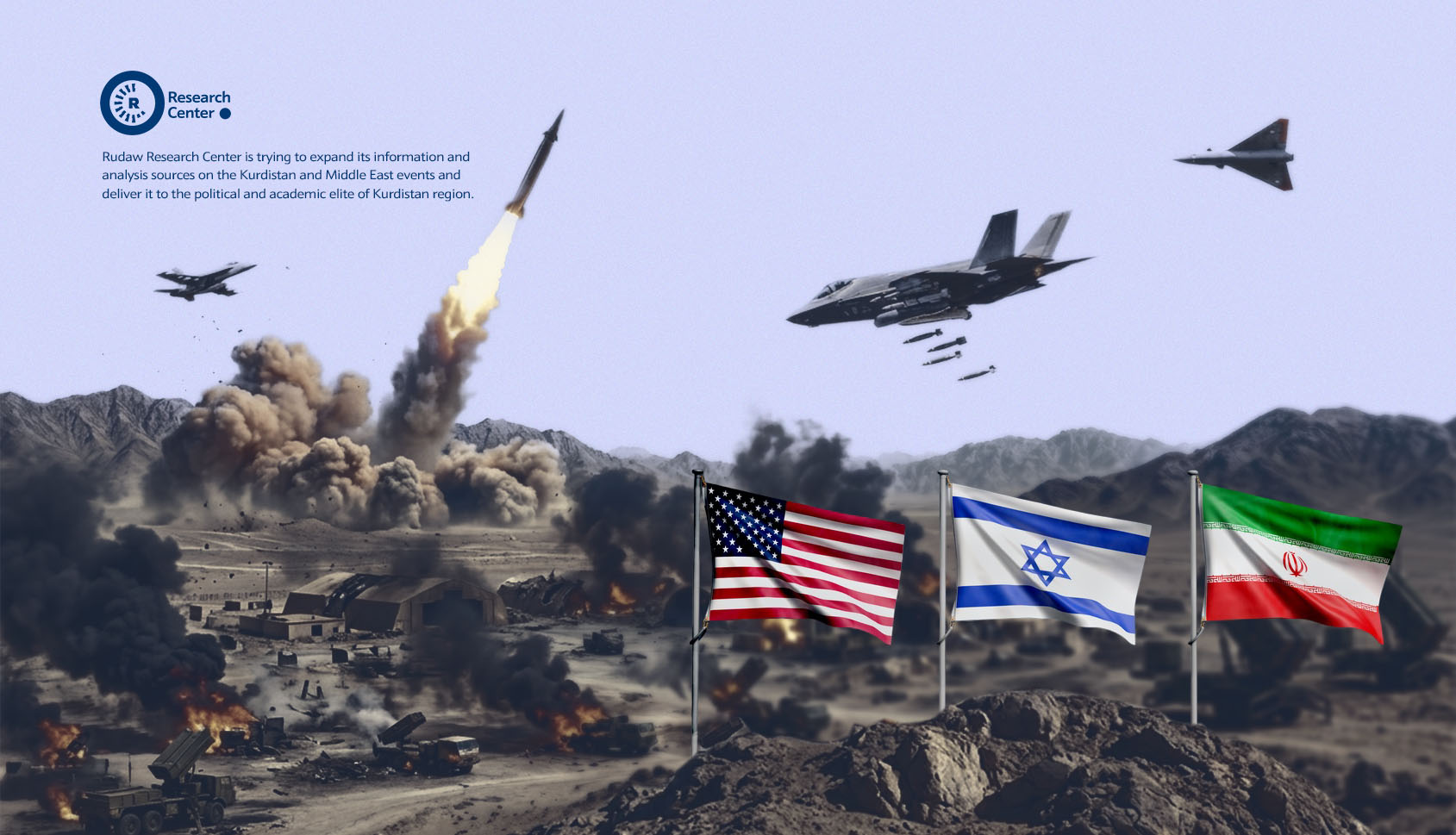
The central question is whether Iraq would be capable of securing these facilities in the event of a hypothetical conflict involving Iran and Israel, or Iran and the United States. One possible U.S. calculation may have been to achieve two objectives simultaneously. On the one hand, in the post-SDF phase, Washington avoids leaving ISIS detainees in the custody of a Syrian state whose intentions and capabilities regarding former jihadists remain uncertain. In this regard, the picture is not entirely black and white: while Trump and Sharaa may converge on several issues, significant points of divergence undoubtedly persist. On the other hand, the presence of roughly 7,000 ISIS prisoners on Iraqi territory, combined with the strengthening of Sunni political forces, Sharaa’s advance toward Iraq’s borders, and sustained U.S. political, diplomatic, and economic pressure, places Baghdad in an increasingly constrained position—one that compels it to weigh carefully before adopting any stance in a potential confrontation between the United States and Iran.
Türkiye and the Situation in Rojava
For Türkiye, the confrontations paved the way for achieving much of what it had long sought. The Autonomous Administration and the SDF no longer exist according to the geographical and structural definition of the time of their establishment. Control over large sections of the border, as well as key oil and water resources, along with Raqqa and Deir ez-Zor, has reverted to the Syrian government, while ISIS detainees have been transferred to Iraq. From Ankara’s perspective, the SDF therefore no longer constitutes a “strategic threat.” At the same time, however, the conflict triggered a resurgence of Kurdish nationalism—an outcome Türkiye had been attempting to prevent for more than a year through Abdullah Öcalan and the PKK disarmament process. Rather than diminishing Kurdish political consciousness, the confrontations provided a rare boost to Kurdish nationalist sentiment and added a new layer to the long-standing sense of “historical oppression” felt by Kurds across the Middle East. This sentiment cannot be neutralized by Damascus’s military gains or by the achievements of any other state. Regional and international powers are likely watching this development closely. It may also help explain the efforts of Syria’s current authorities to reassure Kurdish communities that “their rights will be protected.”
Turning Points in Kurdish Politics
Developments in Rojava have also triggered a shift in internal Kurdish politics, with President Masoud Barzani re-emerging as a central reference point for addressing the Kurdish issue in the Middle East. This renewed prominence does not necessarily align with Abdullah Öcalan’s vision, because during a reported meeting with a Turkish parliamentary delegation, Öcalan stated: “What Devlet Bahçeli represents for Turkish nationalism, I represent among the Kurds of the Middle East.” In that context, he framed the Kurdish issue through the prism of broader geopolitical rivalries and Israeli interests—despite the fact that the Kurdish issue long predates the establishment of Israel.
Ocalan’s proposal for negotiations between the SDF and the Syrian government is realistic given Rojava’s current situation, though opportunities for a more comprehensive settlement existed earlier. He envisions transforming SDF forces into internal security units, implementing revenue sharing, and establishing some form of administrative decentralization. Yet the evolving regional context now makes it clear that any political agreement on Rojava’s future will require the involvement of external actors beyond the SDF and the Syrian government.
At a deeper level, the core of Öcalan’s “ideological transformation,” grounded in the principles of the “brotherhood of peoples” and the rejection of territorial sovereignty as a political solution, has faced serious limitations. The vision of governing roughly one-third of Syria’s territory and uniting diverse communities primarily through an ideological framework proved unsustainable in the Rojava experience. Moreover, a fundamental contradiction remains unresolved: how the principles of the Democratic Republic canreconcile the coexistence of two ideologically incompatible currents—the Islamic-jihadist tradition on the one hand and the Marxist-Leninist tradition on the other.
Beyond its repercussions on internal Kurdish politics, the Kurdish community now finds itself at a historic crossroads. It faces a delicate balancing act: either maintain a precarious neutrality or risk isolation by taking sides among the region’s competing poles. The central question is no longer merely the future of Kurds in Syria or the integration of the SDF into the Syrian army. Rather, it is: where is the Kurdish condition headed amid the dynamics of the “Sunni Crescent,” “Shiite containment,” and the emerging regional security architecture?